
- About
- Conditions
- Treatments
- Balloon Sinuplasty
- Resources
- Contact Us

- About
- Conditions
- Treatments
- Balloon Sinuplasty
- Resources
- Contact Us
Snoring and Sleep Apnea Treatment in Los Angeles
Snoring and sleep apnea are among the most common and most disruptive sleep disorders affecting adults and children in the greater Los Angeles area. At Southern California ENT and Allergy Associates (SCENTAA), Dr. Michael Bublik is a board-certified otolaryngologist and fellowship-trained nasal surgeon who offers a full range of sleep apnea treatments, from non-surgical management to minimally invasive in-office procedures, each tailored to the underlying cause of your condition. If you or someone you love is struggling with poor sleep, chronic snoring, or daytime fatigue, read on to learn about your diagnosis and treatment options. To get started, call our Los Angeles or Glendale office to schedule a consultation today.
What is Sleep Apnea?
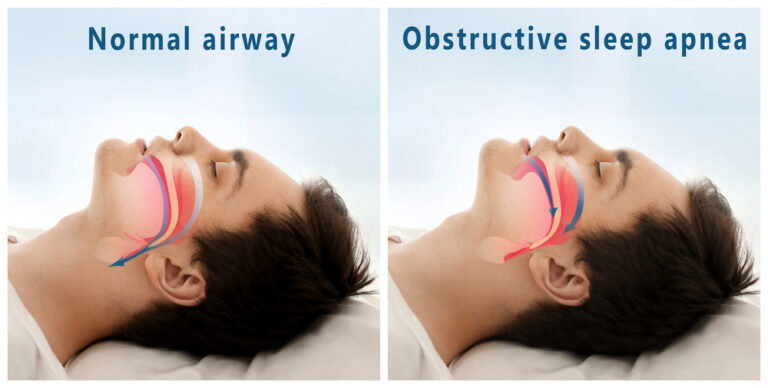
Sleep apnea is a common disorder in which you have one or more pauses in breathing or shallow breaths while you sleep. Breathing pauses can last from a few seconds to minutes and may occur 30 times or more per hour. Typically, normal breathing resumes on its own, sometimes with a loud snort or choking sound.
Sleep apnea is usually a chronic condition that disrupts your sleep quality. When your breathing pauses or becomes shallow, you shift from deep sleep to light sleep, leaving you tired and unrefreshed during the day. Sleep apnea is one of the leading causes of excessive daytime sleepiness.
Signs and Symptoms of Sleep Apnea
One of the most common signs of obstructive sleep apnea is loud and chronic snoring. Pauses may occur mid-snore, followed by choking or gasping sounds. These episodes cause brief drops in blood oxygen levels that are harmful to your body over time.
Snoring is usually loudest when sleeping on your back and may be less noticeable on your side. You may not snore every night. Over time, snoring tends to become more frequent and louder. Because these episodes happen during sleep, a family member or bed partner often notices them before you do.
Another common sign is fighting sleepiness during the day, at work, at home, or while driving. You may find yourself falling asleep quickly during quiet or inactive moments. Even if you do not have obvious daytime sleepiness, speak with Dr. Bublik if you have difficulty breathing during sleep.
Note: Not everyone who snores has sleep apnea. A proper evaluation is the only way to confirm a diagnosis.
Others signs and symptoms of sleep apnea include:
- Morning headaches
- Daytime fatigue and sleepiness
- Memory or learning difficulties and inability to concentrate
- Feeling irritable, depressed, or experiencing mood swings
- Waking up frequently to urinate
- Dry mouth or sore throat upon waking
How Is Sleep Apnea Diagnosed?
Dr. Michael Bublik and his team at SCENTAA serve patients throughout Los Angeles and Glendale. Your evaluation begins with a complete physical exam and detailed medical history, including questions about your sleep patterns, daytime energy levels, and any symptoms reported by a bed partner.
As part of the exam, Dr. Bublik will assess your nose, neck, and throat to identify the exact areas of obstruction contributing to your sleep apnea. Common anatomical causes include a deviated septum, enlarged turbinates, swollen tonsils, a long or thick uvula, a floppy soft palate, or a large base of tongue, any of which can narrow or block the upper airway during sleep.
If sleep apnea is suspected, you may be referred for a sleep study, known as polysomnography (PSG). A PSG measures apneas, blood oxygen levels, snoring, and other events overnight. Depending on the severity of your symptoms, the study may be performed at a sleep center or arranged as an at-home test.
Sleep Apnea Treatment Options in Los Angeles
At SCENTAA, we take a personalized approach to treating sleep apnea. Because every patient’s anatomy and the severity of obstruction differ, Dr. Bublik evaluates each case individually before recommending a treatment plan. Options range from CPAP therapy to a range of minimally invasive surgical procedures, several of which can be performed in the office with little to no downtime.
Continuous Positive Airway Pressure (CPAP):
CPAP is the most widely prescribed treatment for moderate-to-severe sleep apnea and remains the clinical gold standard. A CPAP machine delivers continuous pressurized air through a mask worn over the nose during sleep, keeping the airway open and preventing breathing pauses.
While effective, many patients find CPAP difficult to tolerate long-term. In some cases, an underlying nasal or throat obstruction makes it harder to breathe through the mask, further reducing compliance. If you have mild to moderate sleep apnea and cannot tolerate CPAP, you may be a candidate for one of the minimally invasive surgical options listed below, several of which are performed in the office with no downtime.
Septoplasty
The septum is the midline structure of the nose, made of bone and cartilage, that divides the two nasal passages. A deviated septum, one that is shifted to one side or S-shaped, can partially or completely block airflow, contributing to snoring and sleep apnea.
Deviated septums commonly develop during the teenage growth spurt, when the nose grows faster than the surrounding space can accommodate, causing the septum to bend or form a bump. Nasal trauma can also shift the septum out of alignment.
Dr. Bublik performs septoplasty in a minimally invasive manner using a small endoscopic camera passed through the nostrils. There are no external incisions, no bruising on the outside of the nose, and the nose is not packed afterward, a significant improvement over older techniques. Often, septoplasty is combined with turbinate reduction to maximize improvement of the nasal airway.
Septoplasty alone does not change the external appearance of the nose. Patients who also want a cosmetic change can have both the functional and aesthetic correction addressed in a single surgery. Dr. Bublik specializes in the Complete Nose Job, which addresses both the form and function of the nose.
Submucosal Turbinate Reduction
The turbinates are ridged structures inside the nasal cavity that warm and humidify the air you breathe. When the inferior turbinates become enlarged, they can obstruct the nasal airway and contribute to snoring and sleep apnea. During a submucosal turbinate resection, the bone within the turbinate is precisely reduced, resulting in long-term improvement in nasal airflow.
Turbinate reduction can be performed using two approaches:
- In-office: Using radiofrequency ablation (Coblation) or submucosal resection under local anesthesia.
- Under general anesthesia: Often combined with septoplasty when a deviated septum is also present.
Regardless of the approach used, recovery is comfortable, there is no nasal packing, and most patients are breathing clearly through their nose on the same day. Our surgeons in Los Angeles and Glendale will assess the full cause of your nasal obstruction and determine whether turbinate reduction is the right fit for you.
Tonsillectomy and Adenoidectomy
The tonsils and adenoids are masses of tissue located at the back of the throat and in the nasal passages. When enlarged, they can significantly narrow or block the airway, a leading cause of sleep apnea in both children and adults.
Dr. Bublik and our team use the latest minimally invasive technology, including Coblation, to perform tonsillectomy and adenoidectomy, resulting in reduced postoperative discomfort and faster healing compared to traditional methods.
In children under 13, enlarged tonsils and adenoids are responsible for the majority of obstructive sleep apnea cases. In most cases, adenoidectomy and tonsillectomy can significantly reduce or eliminate sleep apnea symptoms and improve sleep quality. Many parents return months later reporting that their child is sleeping better, snoring less, and performing more confidently at school and in social settings.
Pillar Implant Procedure
The Pillar Implant Procedure is a minimally invasive, in-office treatment for snoring and mild-to-moderate sleep apnea. Small implants are inserted into the soft palate, stiffening the tissue over time and reducing the vibration that causes snoring. The procedure is performed under local anesthesia, typically takes less than 30 minutes, and requires no general anesthesia or hospital stay.
Patients typically return to normal activity, including eating and drinking, the same day. Results are gradual; most patients begin to notice improvement after approximately two months as the body integrates the implants into the soft palate. Dr. Bublik sometimes combines the Pillar Procedure with a Coblation-assisted uvulectomy to address both the anterior and posterior soft palate in patients with a prominent uvula. If you feel you may be a candidate, please contact us today.
Coblation
Coblation uses low-temperature radiofrequency energy to precisely remove or reduce excess soft tissue, including tonsils, turbinates, and the soft palate, with significantly less thermal damage to surrounding structures than traditional surgical techniques. This results in reduced post-operative pain and faster recovery time for patients.
Dr. Bublik and our team use Coblation across multiple procedures, including turbinate reduction, tonsillectomy, and uvulectomy.
Uvulopalatopharyngoplasty (UPPP)
Uvulopalatopharyngoplasty, commonly referred to as UPPP or UP3, is a surgical procedure designed to widen the upper airway by removing or repositioning tissue at the back of the throat. The procedure involves tonsillectomy, reorientation of the tonsillar pillars, and removal of the uvula and posterior rim of the soft palate. The result is a larger, less obstructed airway that allows for improved airflow during sleep.
UPPP is typically recommended for patients with moderate to severe obstructive sleep apnea who have not been able to tolerate CPAP therapy and for whom less invasive procedures have not produced sufficient improvement. Unlike the in-office procedures listed above, UPPP is performed under general anesthesia in a surgical setting and requires a recovery period of approximately 1 to 2 weeks.
While UPPP involves more recovery than our minimally invasive options, it is an important and effective treatment for patients who need a more comprehensive surgical solution. Dr. Bublik will discuss your full range of options during your consultation to help you make the most informed decision for your health.
GET IN TOUCH

Frequently Asked Questions:
What is the difference between snoring and sleep apnea?
Snoring is the sound produced when airflow causes relaxed throat tissues to vibrate during sleep. Sleep apnea is a medical condition in which breathing repeatedly stops and starts, sometimes 30 or more times per hour. While loud, chronic snoring is one of the most common signs of sleep apnea, not everyone who snores has the condition. A physical evaluation and sleep study are the most reliable ways to determine whether sleep apnea is present.
What are the surgical alternatives to CPAP for sleep apnea?
For patients who cannot tolerate CPAP, Dr. Bublik at SCENTAA offers several minimally invasive surgical alternatives depending on the location of the obstruction. These include septoplasty, submucosal turbinate reduction, tonsillectomy and adenoidectomy, the Pillar Implant Procedure, Coblation, and UPPP. Many of these procedures can be performed in the office under local anesthesia with little to no downtime. The most appropriate option is determined during your evaluation.
How is sleep apnea diagnosed?
Diagnosis begins with a complete physical exam and medical history at our Los Angeles or Glendale office. Dr. Bublik will examine your nose, throat, and neck to identify anatomical factors contributing to airway obstruction. If sleep apnea is suspected, you may be referred for a polysomnography (PSG) sleep study to measure breathing pauses, oxygen levels, and snoring during sleep.
Can sleep apnea be treated without surgery?
Yes. CPAP therapy is the most common non-surgical treatment and remains the gold standard for moderate to severe sleep apnea. Lifestyle changes, such as weight loss, positional therapy, and avoiding alcohol before bed, can also reduce symptoms in milder cases. However, if an anatomical obstruction is present, surgical treatment is often the most effective long-term solution. Dr. Bublik will discuss all appropriate options with you based on your diagnosis.
Is sleep apnea treatment covered by insurance?
Many sleep apnea treatments, including diagnostic sleep studies, CPAP therapy, and surgical procedures, are covered by health insurance when medically necessary. Coverage varies by plan and by procedure. Our team at SCENTAA can help you understand your coverage options and assist with pre-authorization prior to treatment. We recommend contacting your insurance provider directly to confirm your specific benefits.
How long does it take to recover from sleep apnea surgery?
Recovery time depends on the procedure. In-office procedures such as Coblation and the Pillar Implant typically allow patients to resume normal activity, including eating and drinking, the same day. Septoplasty and turbinate reduction generally involve a few days of mild congestion. Tonsillectomy may require one to two weeks of recovery. UPPP, as the most involved procedure, typically involves one to two weeks of recovery. Dr. Bublik will provide a personalized recovery timeline during your consultation.
Can children have sleep apnea?
Yes. Sleep apnea is common in children, particularly those with enlarged tonsils and adenoids. In children under 13, these enlarged tissues are responsible for the majority of obstructive sleep apnea cases. Signs in children include loud snoring, mouth breathing, restless sleep, and difficulty waking in the morning. Adenoidectomy and tonsillectomy are frequently effective in significantly reducing or eliminating sleep apnea symptoms in children. Many parents report improvements in sleep, behavior, and school performance following surgery.
What causes obstructive sleep apnea?
Obstructive sleep apnea occurs when the muscles and tissues of the upper airway relax during sleep, narrowing or fully blocking the airway. Common anatomical causes include a deviated septum, enlarged turbinates, enlarged tonsils or adenoids, a long or thick uvula, a floppy soft palate, or a large base of tongue. In some patients, multiple factors contribute simultaneously. Identifying the specific cause is essential to choosing the most effective treatment.
What is a polysomnography (PSG) sleep study?
A polysomnography is an overnight diagnostic test that monitors multiple body functions during sleep, including breathing patterns, blood oxygen levels, heart rate, brain activity, and snoring. It is the most comprehensive tool for diagnosing sleep apnea and determining its severity. The test can be performed at a sleep center or, for appropriate patients, conducted at home using a portable monitoring device. Results help Dr. Bublik determine the most suitable treatment approach.
What is Coblation, and how is it used to treat sleep apnea?
Coblation uses low-temperature radiofrequency energy to precisely reduce or remove excess soft tissue in the nose and throat. Targeted tissues include turbinates, tonsils, and the soft palate. This approach results in less thermal damage and reduced post-operative pain compared to traditional surgical methods. It is used at SCENTAA across several sleep apnea procedures, including turbinate reduction, tonsillectomy, and uvulectomy, often as a standalone in-office procedure performed under local anesthesia.
What is septoplasty, and can it help with sleep apnea?
Septoplasty is a surgical procedure to straighten a deviated nasal septum (the cartilage and bone wall dividing the two nostrils). When the septum is significantly deviated, it can obstruct nasal airflow and contribute to snoring and sleep apnea. Dr. Bublik performs septoplasty endoscopically through the nostrils, leaving no external scars or bruising, and without nasal packing after surgery. It is often performed alongside turbinate reduction to maximize airway improvement.
Is the Pillar Implant Procedure painful?
The Pillar Implant Procedure is performed under local anesthesia and is well-tolerated by most patients. Discomfort during and after the procedure is typically minimal. The entire in-office procedure takes less than 30 minutes, and patients are generally able to resume normal activities, including eating and drinking, the same day. Most patients begin to notice improvement in snoring and sleep quality after approximately two months as the body integrates the implants.
What is UPPP surgery, and who is it for?
Uvulopalatopharyngoplasty (UPPP) is a surgical procedure that removes or repositions tissue at the back of the throat, including the uvula, part of the soft palate, and the tonsils. The goal is to widen the upper airway. It is typically recommended for adults with moderate to severe obstructive sleep apnea who have been unable to tolerate CPAP and for whom less invasive procedures have not provided sufficient relief. Recovery takes approximately one to two weeks. Dr. Bublik will assess whether you are a suitable candidate during your consultation.
How do I know which sleep apnea treatment is right for me?
The right treatment depends on the severity of your sleep apnea, the location and nature of the obstruction, your anatomy, and your personal preferences regarding surgery and recovery. Dr. Bublik conducts a thorough evaluation, including a physical exam and, if appropriate, a sleep study, before recommending a treatment plan. For many patients, the most effective and lasting solution is to address the underlying anatomical cause of the obstruction, which may be achievable through a minimally invasive in-office procedure.
Where can I get sleep apnea treatment in Los Angeles?
Dr. Michael Bublik and the team at Southern California ENT and Allergy Associates (SCENTAA) provide comprehensive sleep apnea diagnosis and treatment at locations in Los Angeles and Glendale. From in-office minimally invasive procedures to full surgical solutions, our team offers the full spectrum of sleep apnea care. To schedule a consultation, call our office or use the booking link on this page.
Ready to Sleep Better?
Schedule a Consultation in Los Angeles or Glendale
Dr. Bublik and the team at SCENTAA are ready to help you find a lasting solution to snoring and sleep apnea. Whether you are exploring your options for the first time or have already tried CPAP without success, we offer a full range of treatments tailored to your specific anatomy and lifestyle. Contact our Los Angeles or Glendale office today to book your consultation.